AI that understands your business
SideIQ wasn’t born from a whiteboard session. It emerged on the floor of two Dutch companies that each hit the same problem from opposite sides — and decided it could be done differently.
At Redframe, a Dutch web and software development company, we had wrestled our way through just about every software promise out there.
ClickUp to run everything. Notion to organize knowledge. Pipedrive and HubSpot for customer management. Aircall and Ringover for telephony. Airtable to bolt on custom modules. Close.com for call features. Asana for project management. Make and Zapier to wire it all together.
A tour of just about every modern SaaS stack you can think of.
Each of those tools did something well.
None of them did everything a working SMB needs.
ClickUp was flexible enough to build almost anything in — but you couldn’t dial out from it.
Aircall called well, but the CRM link cost €150 to integrate and only opened the contact card after a lag.
Notion was a beautiful knowledge system — but not a CRM, and certainly not invoicing.
Templates had to be downloaded, translated, tweaked, then re-tuned again for each new customer.
We spent more time maintaining tools than doing the work.
And when you’re that stuck as a software company yourself, it cuts twice as deep.
We know how software is supposed to work.
We ship it ourselves for clients.
Yet we were stuck in the same fragmentation every customer feels.
Somewhere halfway, the insight arose that would later define the entire platform:
in 2025, with the AI capabilities available now, software no longer needs to be a rigid box of fixed fields and fixed flows.
Software can be adaptive.
It can think with you.
It can take shape based on what really happens.
That wasn’t future talk anymore. That was something you could build today.

Hygienic is the company behind Bureau voor Dierplagen, a Dutch pest-control operator.
An SMB with B2B clients, residential customers, a mobile crew in the field, and an office running the show.
On paper a classic SMB. In practice a company that worked through nine different tools daily to serve a single customer.
Pestscan for B2B with IP rules and trapping points on floor plans.
Teamleader for residential, quotes and CRM.
SnelStart for invoicing and accounting.
Adobe Sign for signing.
Gmail for email.
Google Calendar for scheduling, with a one-way sync to Teamleader so a change in the calendar couldn’t be edited back.
Google Docs for quote templates you had to paste into quotes by hand each time.
Google Maps for routing, with no clue which work orders actually formed the stops.
WhatsApp off to the side, somewhere in the middle of it all.
And not one of those tools understood what was happening in the others.
The fallout was everywhere to see.
Website leads flowing through Make into Teamleader choked on every spam wave and had to be sorted by hand.
Work orders could only be created on mobile, while the office is where most prep happens.
A consultant once tried to cram everything into Notion, stalled on quoting and invoicing, looked for bridges to Odoo, cost thousands of euros, and still didn’t deliver a working system.
By then an extra hire at the office did nothing but move and sync data between tools.
A Tuesday morning, half past eight.
The phone rings.
A B2B customer reports an urgent issue: rodents in a warehouse.
The visit is booked in Google Calendar.
The lead lands in Teamleader.
The location is in Google Maps.
But the work order?
It doesn’t exist yet.
The engineer heads out anyway, without the full picture.
On site it turns out there was already an inspection.
Photos and advice live somewhere in Pestscan.
But nobody had them at hand.
Back at the office a quote is being prepared,
based on incomplete information.
A day later:
the customer gets a quote that doesn’t match reality.
Another day later:
the correct information finally gets hunted down.
Work doubled. Time slipped. Trust dropped.
What was really happening here was more than technical pain.
Money lost. Time that never came back. Work that happened but was never really visible anywhere.
And above all, it was a pattern that wasn’t unique to Bureau voor Dierplagen.
Every SMB has its own version of this story. Different tool names — the same structure.
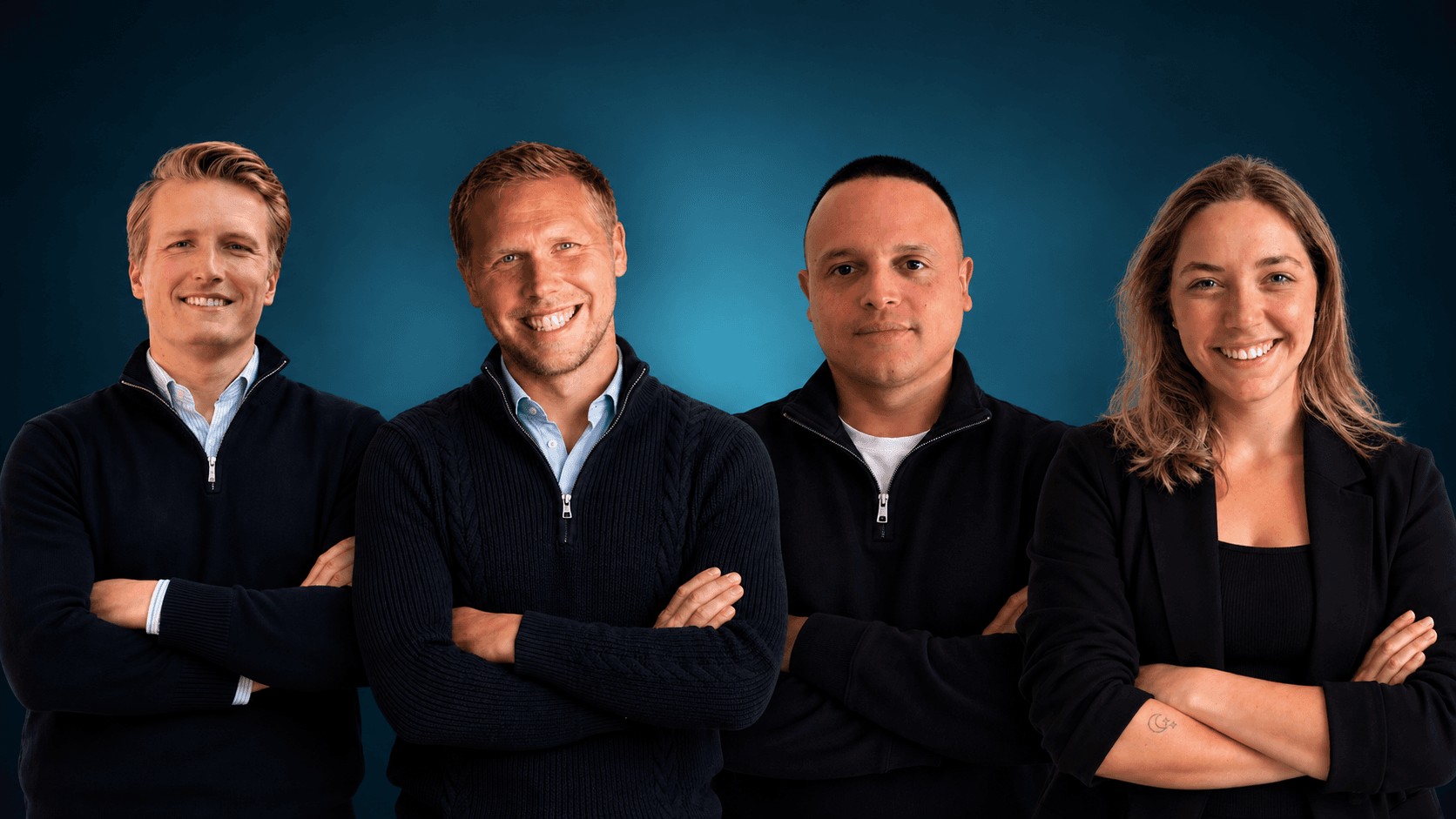
Paul and Kasper met on a joint customer engagement — quickly discovering they battled the same issues, each from opposite sides of the work.
What began as client work quickly became something else.
When Redframe tried adapting Teamleader to Hygienic’s work-order flow, it exposed how shallow “configurable” really is in most software.
You could add fields. Rename columns. Tweak templates. But you couldn’t shape the actual structure of the work.
A work-order flow for a pest controller is fundamentally different from one for an installer or an estate agent — and no off-the-shelf tool could truly adapt to those differences.
That produced the second big realization.
The first was that AI could make software adaptive.
The second was that adaptive CRM on its own wasn’t enough.
The entire system had to be able to take shape — not just the fields.
Screens, workflows, relationships — everything.
What started as an agent-first CRM in our heads soon grew into something larger.
A platform with three layers: the operational core is fixed, the adaptive layer shapes itself to the business, and the smart layer makes industry-specific work experiences possible.
That isn’t marketing copy.
That’s a conclusion that came straight from practice.
Straight from Hygienic’s reality.
And years of Redframe watching software that never truly fit.
We decided we were going to build this together.
Not as client and vendor,
but as two companies that felt the same problem
and together wanted to build a solution that did not yet exist.
Paul has shipped web platforms, integrations, and bespoke software for clients of all stripes.
The kind of work you do when you know every SaaS tool inside out and exactly where each falls short.
SideIQ is what happens when someone decides to stop accepting those gaps — and do something about them.
“I wanted software that helps me move forward — not software I constantly have to maintain and duct-tape.”
For years Kasper has run a pest-control business in the Netherlands — B2B, residential, a crew in the field, an office running the show.
He combines operational responsibility with entrepreneurship — and knows what it takes to keep a company running daily.
He didn’t read about SideIQ fragmentation in a report.
He lived it in his own organization.
And he still does, because Bureau voor Dierplagen still tests what we build in real time, every day.
What SideIQ becomes takes shape in practice.
“You only see how poorly systems cooperate when you have to slog through them every day. Something had to change.”