Modules / Productie
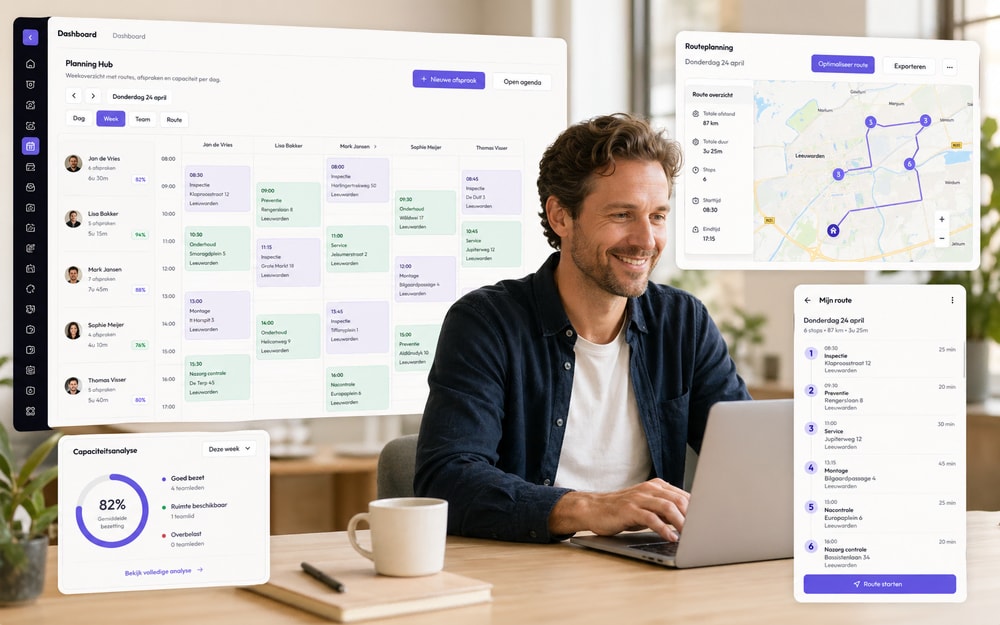
One Planning Hub for appointments, teams and routes.
Plan the day from appointments, team views and route surfaces in one workspace.
Scheduler bookings become SideIQ appointments linked to CRM, calendar context and the customer dossier.
Travel times between stops, day routes and navigation export help dispatchers and field teams move faster.
Not a separate planning add-on beside CRM, but core workflow for booking, execution and routed days.
What you get
01
Planning that starts with customer context. Routes that make the day executable.
SideIQ brings appointments, external booking, team planning and route context into the Planning Hub. You plan from the work that needs to happen, not from isolated calendar blocks.
02
Appointments as core records
every planned customer interaction carries status, location, participants and dossier context
03
Day, week, team and route views
planners see capacity, order and ownership in the same hub
04
External booking
customers book through SideIQ-owned scheduler pages, powered by Nylas underneath
05
Calendar binding
Google and Microsoft stay synchronized without making the provider calendar the source of truth
06
Travel and route context
stops show distance, travel time and feasibility through the existing Maps API
07
Navigation export
send routed days to Google Maps, Apple Maps or Waze for field execution
08
Planning-enabled collections
flexible jobs and custom records appear next to fixed appointments
MODULE · PLANNING AND ROUTE PLANNING
Planning en routeplanning die niet alleen ziet waar iemand moet zijn, maar ook welke klant, werkbon, afspraak en belofte achter elke stop zit.
Why this is different
What standalone planners miss
A calendar knows when something happens, but rarely why. Route planners know stops, but not customer history. Booking tools capture slots, then leave execution and follow-up somewhere else.
How SideIQ structures it
The appointment is its own SideIQ record. It can push to a provider calendar, originate from external booking, connect to CRM and collections, and gain route context without copying data between systems.
What the team gains
Dispatchers see what can happen today, teams know where to go, and customers can book without someone repairing the flow afterwards. From booking to execution, it stays one continuous workflow.
Why this is necessary
Planning is more than allocating time
Without connected planning, your company has to explain again and again what is behind an appointment. The agenda tells you where someone should be, but not always which customer context, work order, instruction, promise or next step belongs.
That is exactly where separate planning software falls short. A route may seem efficient, while implementation still gets stuck because information is missing, changes do not go through properly or the office and field staff work from different sources. Once planning lives outside of SideIQ, the system loses context about what actually needs to be done.
SideIQ therefore makes planning part of the Business Operating System. Appointments, routes, work orders, customer communication and files contribute to the same workflow. The more planning goes through SideIQ, the better SideIQ Intelligence understands what is important today, what needs to be prepared and where follow-up is needed. This way you manage implementation before the day goes off the rails, instead of having to make adjustments afterwards.
Examples
Field service
day routes with appointments, travel times, ad-hoc stops and navigation export
Service and installation
fixed appointments next to flexible collection jobs
Sales and advisory
external booking connected directly to the customer, opportunity and prep context
Planning teams
team lanes, day capacity and quick appointment creation from empty slots